
One of the most frequently asked questions when it comes to nutrition is whether pasta makes you fat. In recent years, carbohydrates have often been blamed, so much so that pasta has become, for many, a food to be avoided. But science tells a very different story.
Pasta is not the problem. As is often the case, the real issue is how much you eat, how it is seasoned and in what context it is eaten.
The real factor affecting weight: calorie balance
To understand whether a food makes you fat, you need to start with a simple but essential concept: calorie balance.
Our body weight depends on the balance between
• the calories we consume each day
• the calories we burn through metabolism and physical activity
If, over time, more calories are consumed than are burned, we gain weight. If the balance is maintained, our weight remains stable. This applies to all foods, including pasta.
That is why it makes no sense to demonise a single food: no food, by itself, makes us fat.
Why carbs aren’t the enemy
Pasta is mainly composed of complex carbohydrates, the main source of energy for our body. They help the brain to concentrate, the muscles to move and the body to face the day.
Unlike simple sugars, complex carbohydrates:
• release energy gradually
• promote a feeling of satiety
• help maintain stable blood sugar levels
It is no chance that the main nutritional guidelines (OMS and CREA) indicate that carbohydrates should cover between 45% and 60% of the daily energy intake in a balanced diet.
Pasta quality matters
When it comes to conscious eating, the quality of the raw ingredients makes all the difference. Choosing pasta made from selected and certified wheat, such as the Valbio organic line, means bringing to the table a product that is made in accordance with organic regulations and certified production processes.
It is not a matter of calories, but of paying attention to food and its origins, an increasingly important aspect for those seeking balance and well-being over time.
The perfect portion: 80 grams really makes a difference
One of the reasons why pasta is often considered a “fattening food” is related to portion sizes.
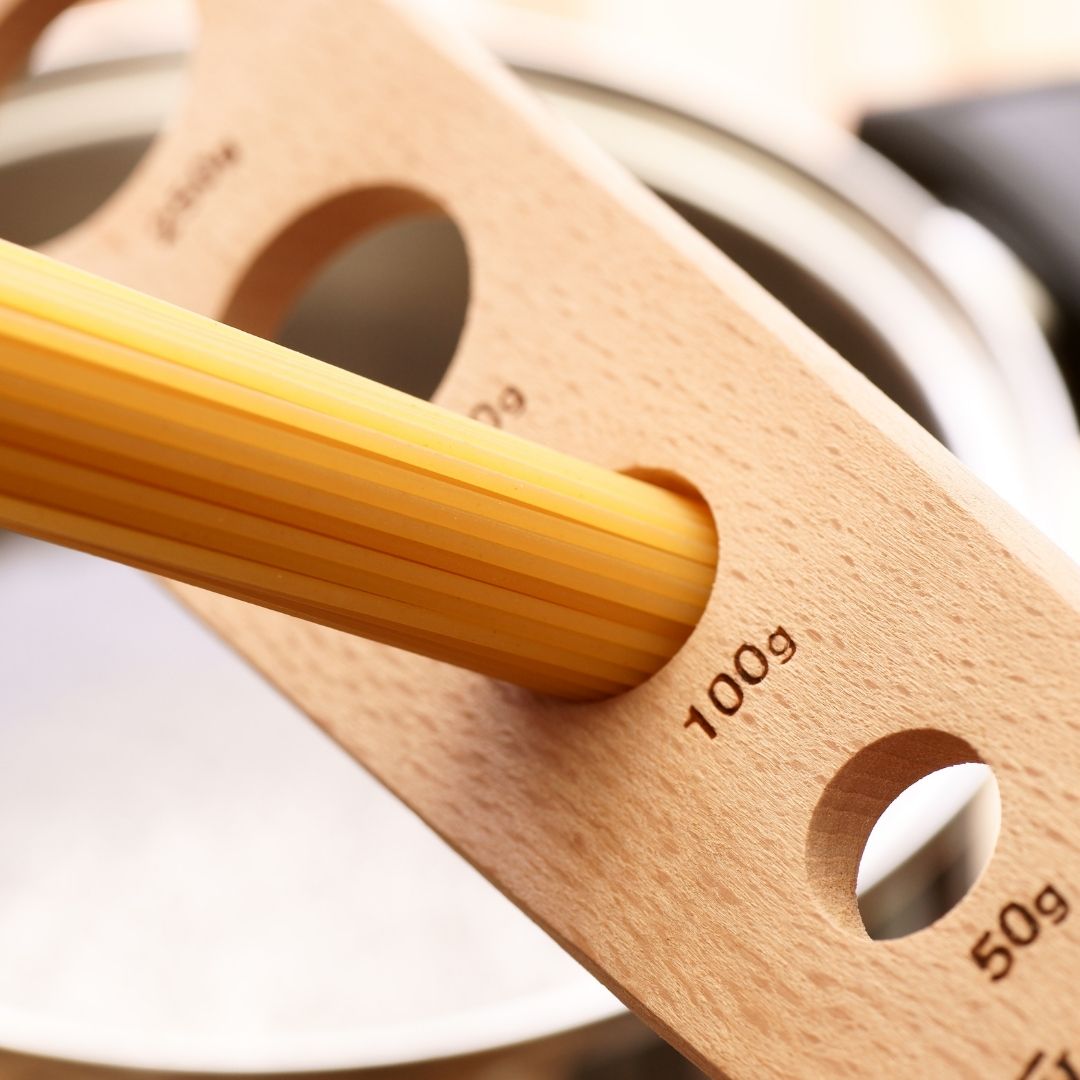
The recommended amount for a healthy adult is about 80 grams of dry pasta, a serving that provides sufficient energy without excess.
In this amount, pasta:
• satisfies hunger
• supports physical and mental activity
• fits easily into a balanced meal
The problem arises when portions habitually increase, often without realising it.
Wholemeal pasta: more fibre, more satiety
An interesting alternative, especially for those who want to feel full for longer, is wholemeal pasta. The products in the Valbio Organic Wholemeal range contain a higher amount of fibre, which:
• slows down the absorption of carbohydrates
• promotes slower digestion
• helps control appetite
This is why wholemeal pasta can be a valuable ally in a balanced diet, without sacrificing the pleasure of a plate of pasta.
The sauce often matters more than the pasta
Another key point concerns how pasta is seasoned.
A plate of pasta with vegetables, legumes, extra virgin olive oil or fish is very different, from a nutritional point of view, from pasta with very high-fat and high-calorie sauces.
In many cases, it is not the pasta that makes you fat, but the overall balance of the dish and how often you choose very elaborate sauces.
What science really says
Scientific research is clear. Numerous studies show that pasta consumption is not associated with weight gain when included in a balanced diet.
A meta-analysis published in BMJ Open highlighted that pasta consumption within the Mediterranean diet is not linked to an increase in body mass index (BMI). This finding reinforces the role of pasta as a food compatible with a healthy lifestyle.
In conclusion: pasta does not make you fat, but eating too much of it does
Pasta is not a food to be avoided, but one to be understood and used in moderation.
The right portions, high-quality ingredients and balanced seasonings are the key to continuing to enjoy it without guilt.
As part of a conscious eating style, pasta – including organic and wholemeal varieties – remains one of the pillars of Italian tradition and the Mediterranean diet. It is an everyday pleasure that can coexist peacefully with wellbeing.
In this journey of food awareness, choosing quality products makes all the difference. Valdigrano, with its Valbio and Valbio wholemeal lines, offers organic pasta made with selected wheat and certified processes, designed for those who want to combine nutritional balance, taste and attention to raw ingredients. Because eating pasta does not mean sacrificing wellbeing, but choosing what you put on the table every day with greater knowledge and quality.